
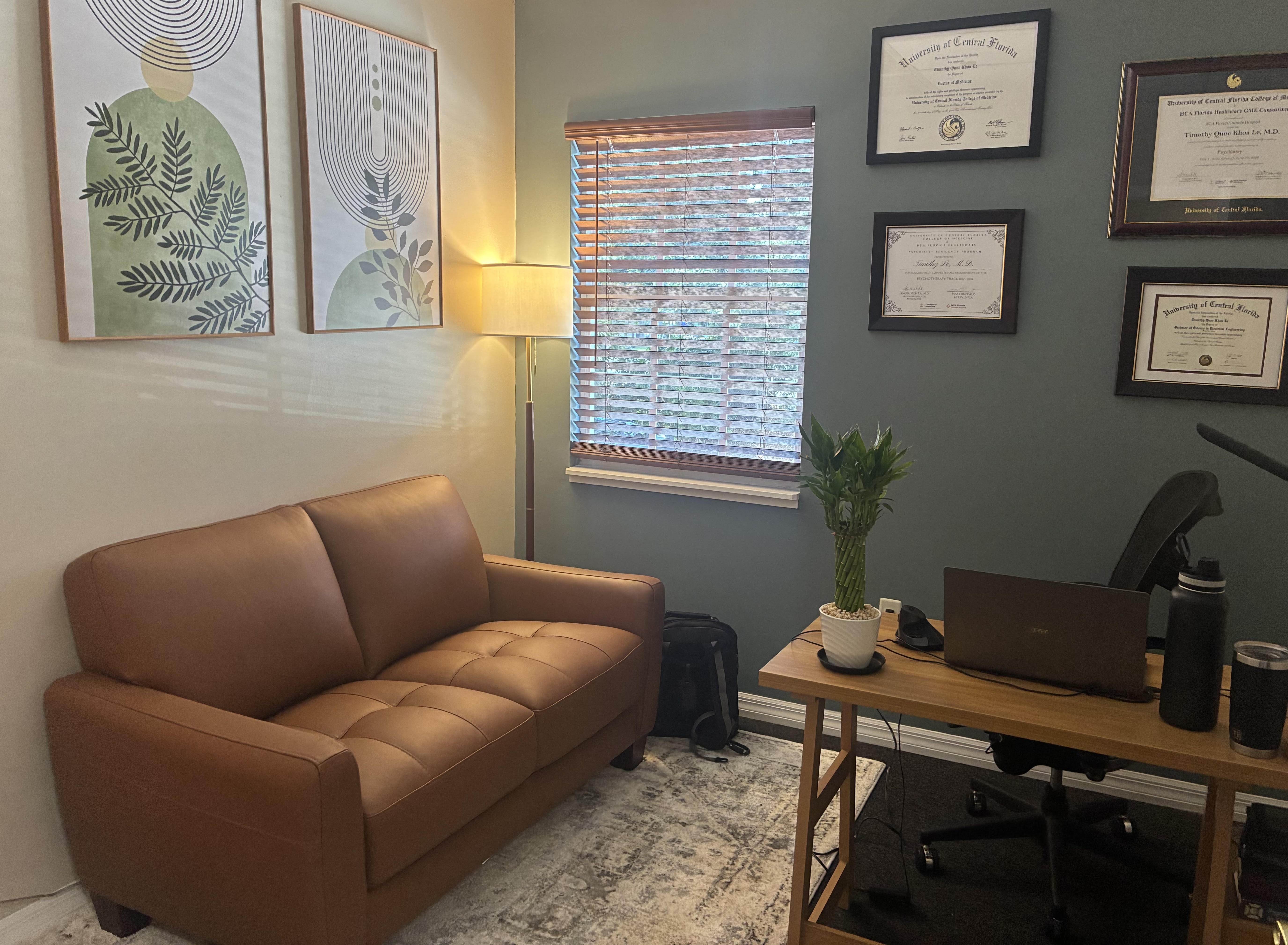
Booking a first visit with a psychiatrist can be a big step to take. The psychiatric evaluation is an opportunity to have an open, thoughtful conversation about what you’ve been experiencing. We want to understand you as a person, agree on the problems worth working on, and build a plan together. Ideally, you also leave feeling a little lighter and more hopeful than when you came in.
Whether you visit us in our Orlando office or through telehealth anywhere in Florida, this guide will walk you through your first appointment, step by step, so you can feel more comfortable, informed, and prepared.
The Evaluation
Typical psychiatric evaluations may take from 60 to 90 minutes.
The first few minutes are open. The evaluation will usually start with an open-ended question, such as "What's been going on?" It is important to tell your story in whatever way makes sense to you. It is normal to spend the initial minutes deciding how comfortable you feel and how much you wish to share. Trust builds at its own pace.
When evaluating symptoms, questions get more specific. Detailed questions (how often, since when, what makes it better or worse) help professionals understand your experience more accurately, and guide how to best support your needs.
Here is what we usually discuss, and why each part matters:
What brings you in now. What you are noticing, when it started, and how it affects work, school, relationships, and sleep.
Your mental health history. Past episodes, diagnoses, treatments, hospitalizations, and what has or hasn't helped. This often shapes the plan more than anything else.
Medical history and medications. Thyroid problems, sleep apnea, hormonal changes, chronic pain, and some medications can all affect mood, anxiety, and focus. We want to make sure nothing physical is being missed.
Substance use. Alcohol, cannabis, caffeine, nicotine, and other substances. We ask without judgment, because these affect both symptoms and medication choices.
Family history. Mental health conditions in relatives can help clarify a diagnosis and predict which treatments may work.
Your life and relationships. Upbringing, culture, important relationships, work, stressors, and what gives your life meaning. Patterns from earlier in life often help explain what is happening now.
Safety. We ask everyone about thoughts of self-harm or suicide. This is a routine part of every psychiatric evaluation, not a sign that we think something is wrong. Answering honestly helps us keep you safe and plan the right care.
We may also use short questionnaires for mood, anxiety, or attention, and we may suggest lab work or coordinating with your primary care doctor.
At the end of the visit
You should leave with a clear picture of what we think is going on and a plan you helped shape. I save unhurried time at the end of every first visit for this, because it is often the most important part.
By this point, it is not uncommon to wonder: What is wrong with me? Am I "crazy"? Did I explain things well enough? Will I get better? What are my options, and what happens next? These are fair questions, and you deserve answers to them.
I share my working understanding of your symptoms, including a diagnosis when one fits, and what may be driving them. Then we decide together on next steps. I will also ask how the visit felt for you, because your feedback shapes how we work together.
The plan may include any mix of:
Medication, when it is likely to help. We review the options, expected benefits, side effects, and how long they usually take to work. You are never required to start medication at the first visit.
Therapy, drawing on CBT, psychodynamic, and supportive approaches, and we coordinate with your therapist if you already have one.
Lifestyle changes: sleep, movement, nutrition, and stress, which often matter as much as anything else.
Coordination with your primary care doctor or specialists, and labs if needed.
If medication comes up, the decision is yours, and it rests on three questions. Is there something you want relief from? Do you believe this medication could help with it? And do the benefits outweigh the downsides for you? We work through those together, including your past experiences with medication and any worries you have.
Ready to take the first step?
If you've been thinking about seeking support, you don't need to have everything figured out before taking the first step. Whether you have specific concerns or simply want to better understand how you're feeling, I'm happy to help you explore your options. Request an appointment online or call (407) 995-6499 to schedule a an introductory call. We see patients in Lake Mary, Orlando, and by telehealth across Florida.
If you are in crisis or thinking about harming yourself, call or text 988 (Suicide & Crisis Lifeline) or call 911. Le Psychiatry Group does not provide 24/7 crisis coverage. This article is for general education and is not a substitute for individual medical advice.